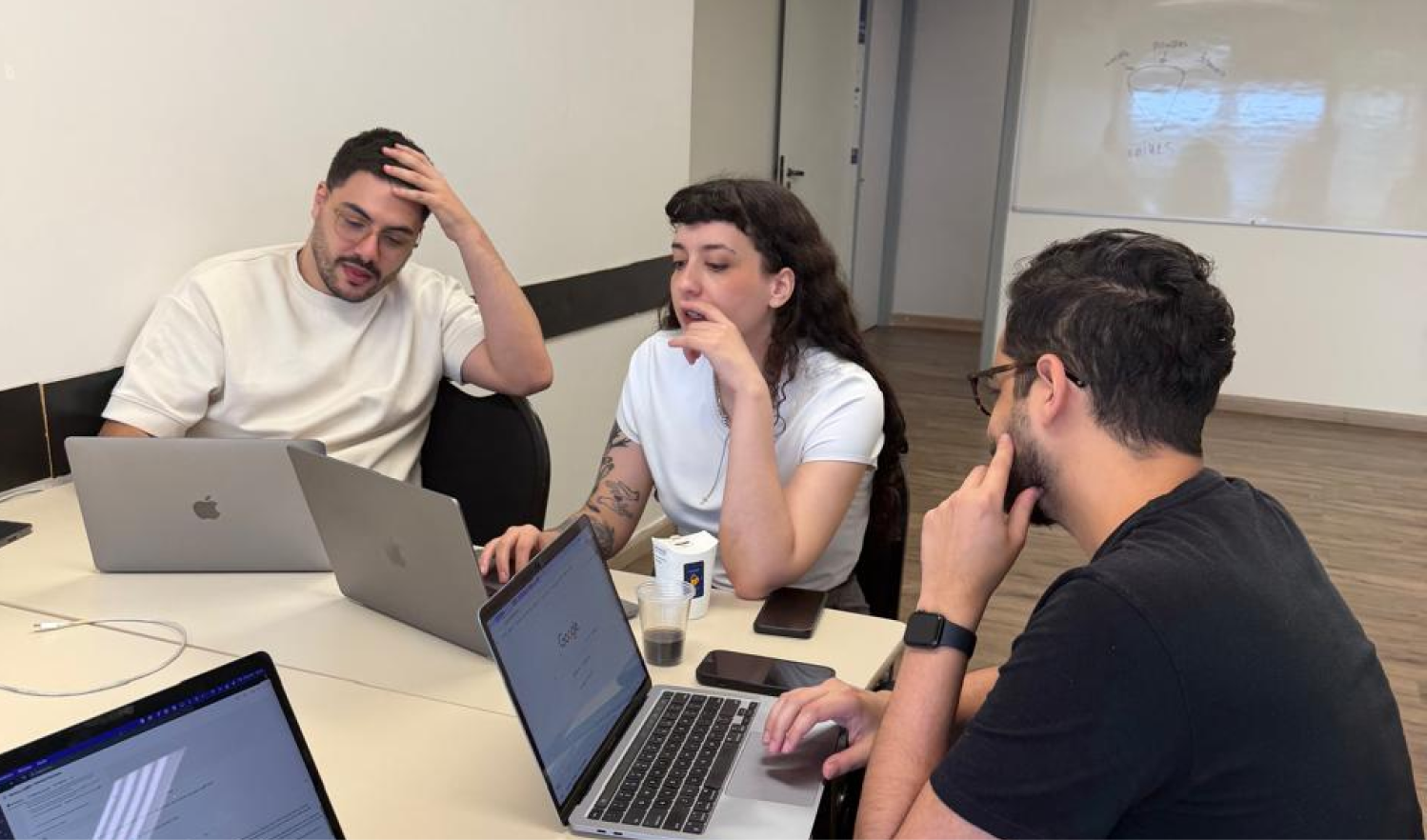
During an internal hackathon focused on a complete platform rebrand, I was one of the designers selected to rethink the experience for different school audiences. My focus was on students, especially how the platform could feel more engaging, expressive, and appropriate for younger audiences.
The problem
One of the recurring signals we received from schools was that the student experience felt too minimal. It was functional and restrained, but had little visual personality, few feedback mechanisms, and limited ways to make students feel progress or motivation.
That became especially relevant for younger audiences, including students in earlier and later years of basic education, which were groups that also showed lower engagement with the platform. So my main objective was:
How might we make the learning experience feel more alive and rewarding without making it childish or distracting?
What makes students want to come back?
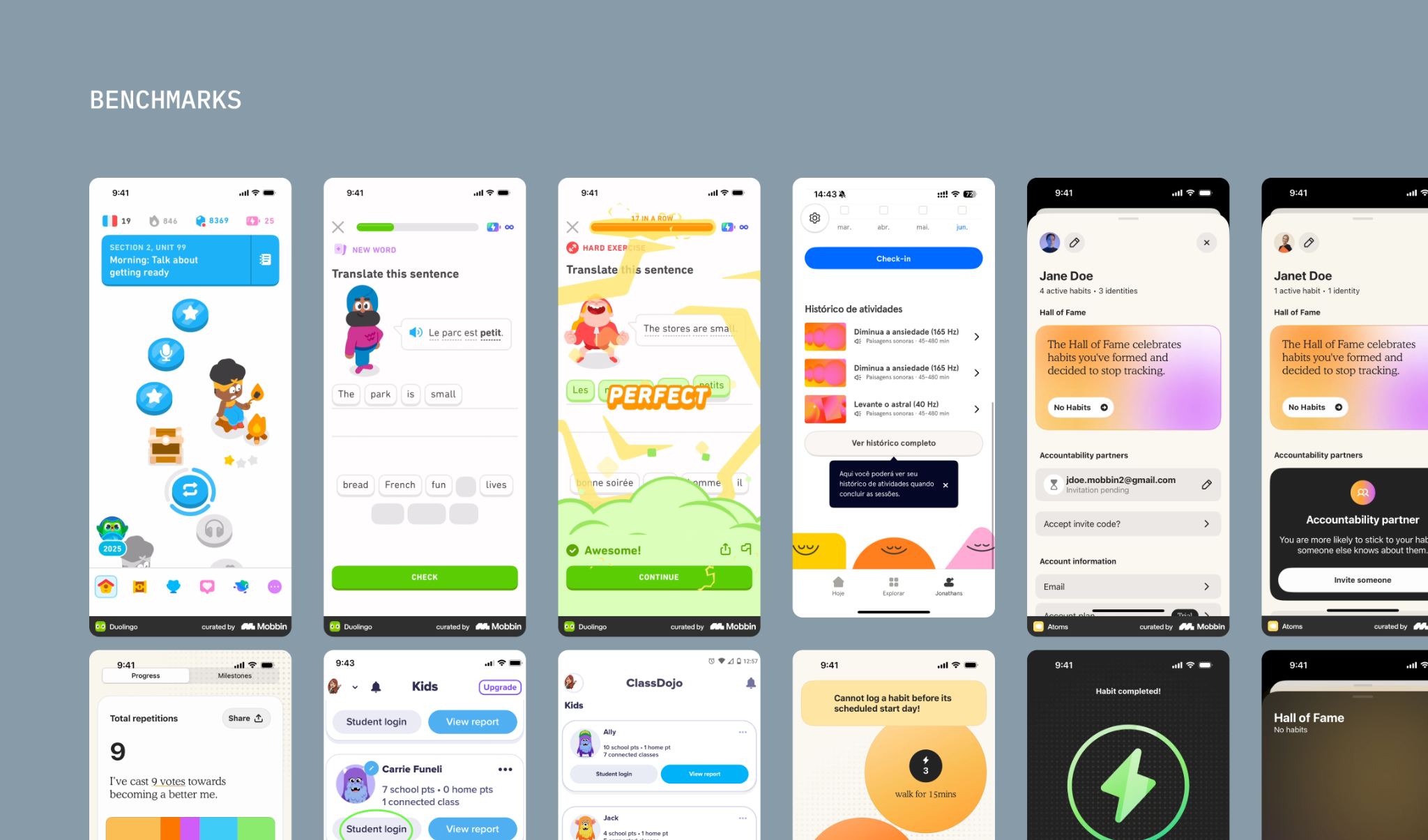
Instead of looking only at traditional LMS products, I explored experiences that were especially good at sustaining engagement with younger audiences. I benchmarked products such as Duolingo and ClassDojo, focusing less on individual features and more on the patterns behind them:
Progress
Make effort visible.
Personality
Give the product emotional recognition.
Celebration
Acknowledge small moments of achievement.
Guidance
Make the next step feel clear and approachable.
Giving the experience a personality
The new experience needed something that could connect these moments together.
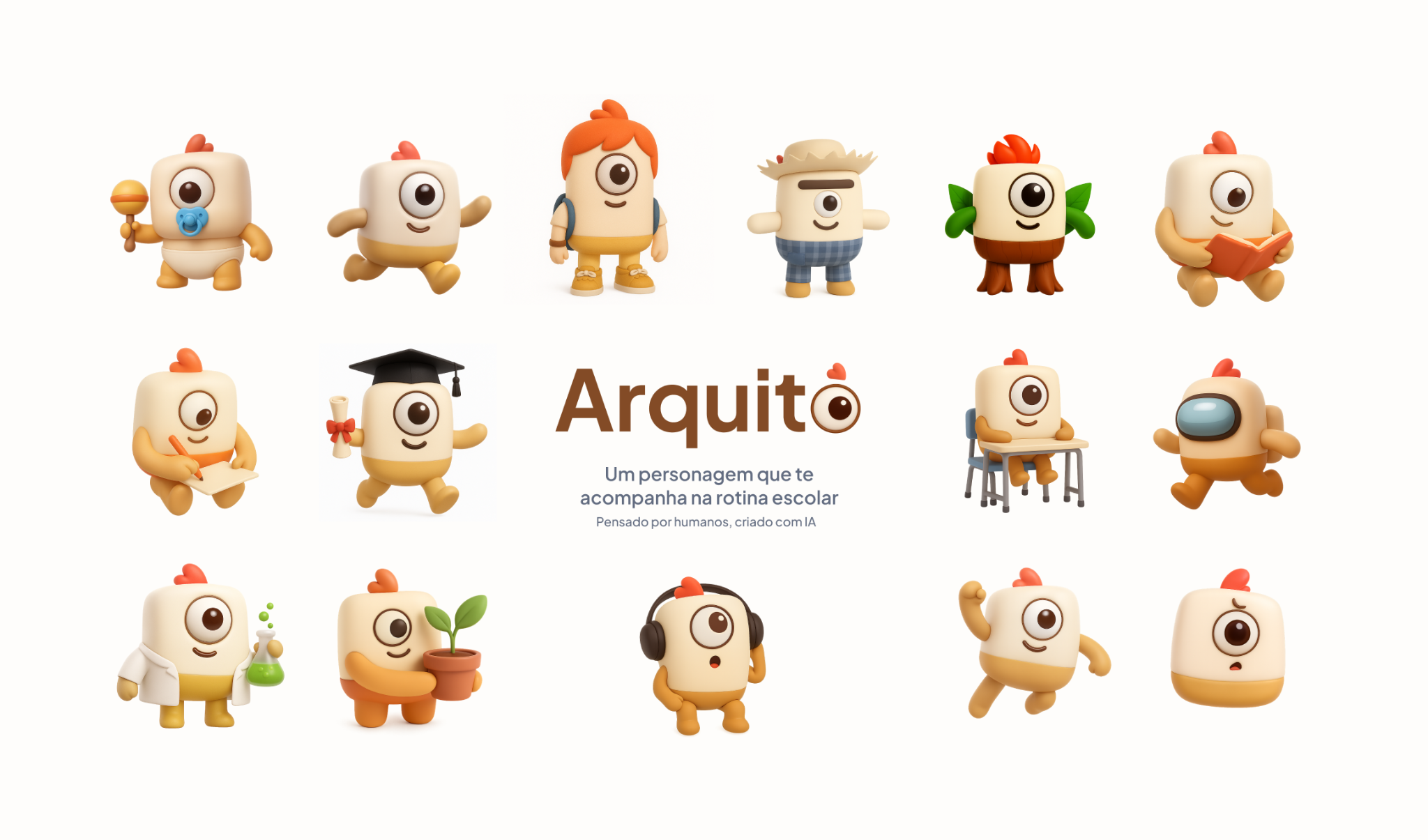
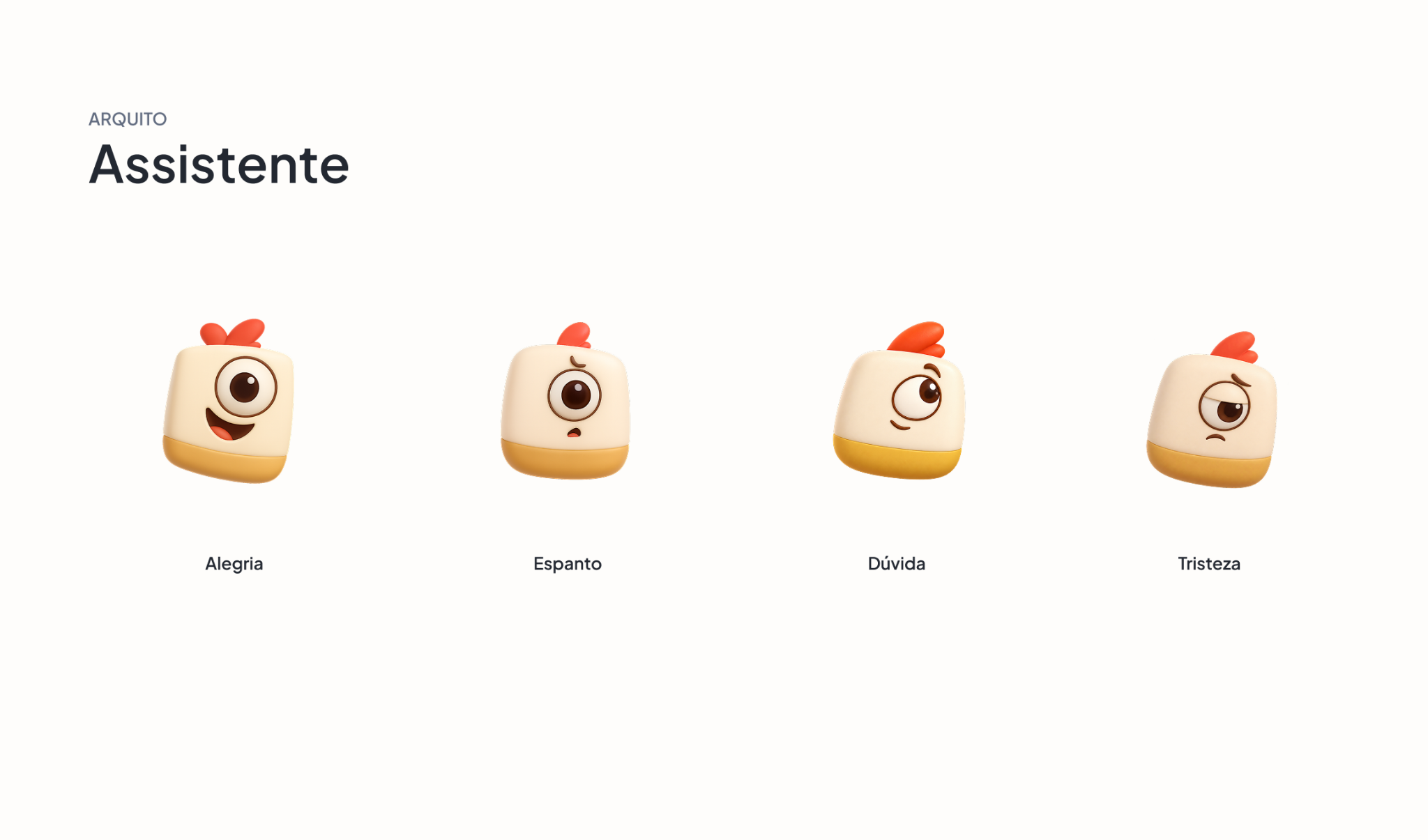
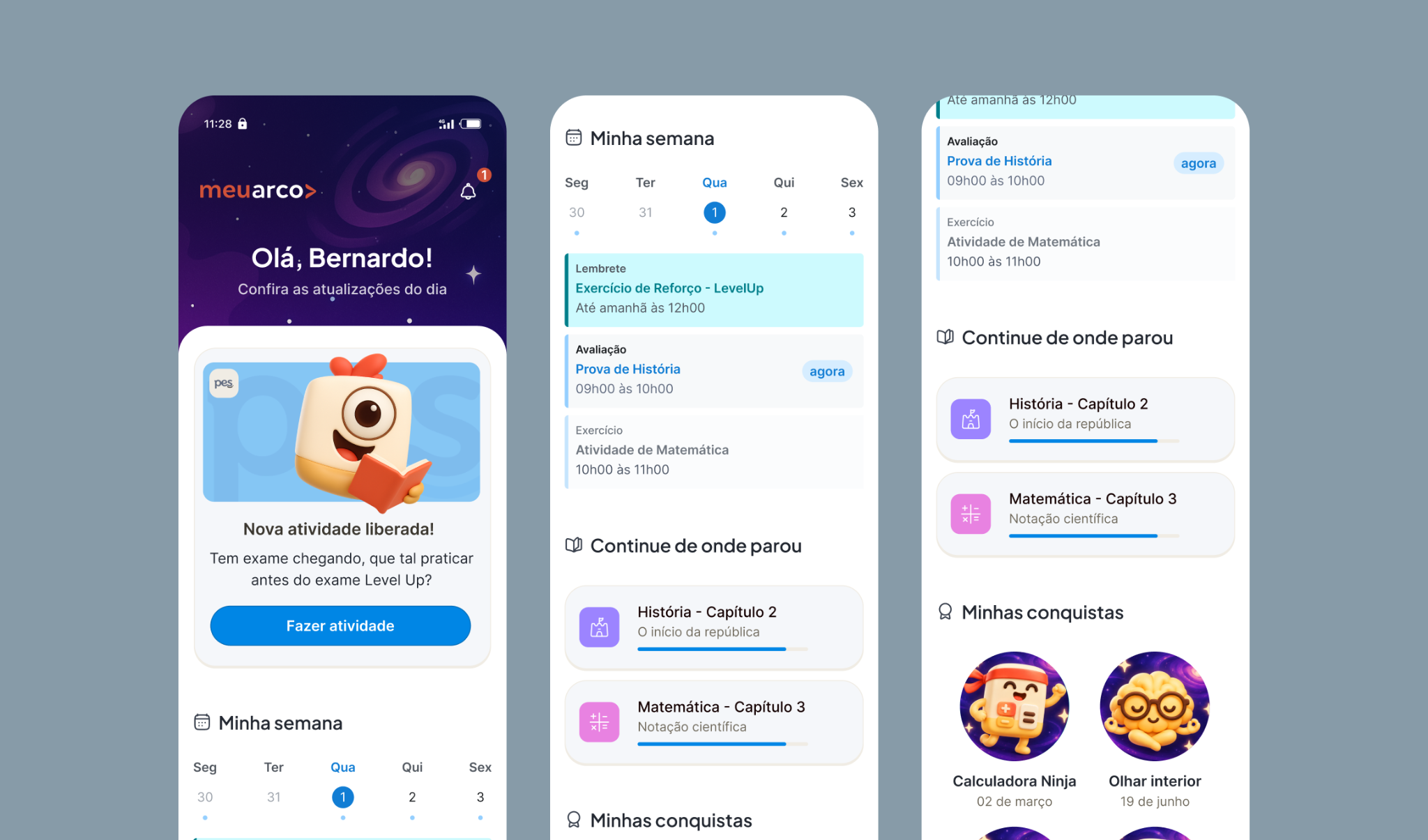
During the visual exploration, I developed Arquito, a mascot designed to give the student journey a recognizable and more expressive personality. The important idea was that he shouldn’t exist only as decoration but could behave as an integral part of the interface.
He could welcome students back, introduce new activities, encourage them after mistakes, celebrate completion and guide them toward what to do next.
More exploration in less time
I used generative AI as part of the character exploration process, helping me quickly test different visual directions, expressions, poses, and personalities for Arquito. AI allowed me to expand the range of ideas we could evaluate within a limited timeframe.
Building a more expressive student UI
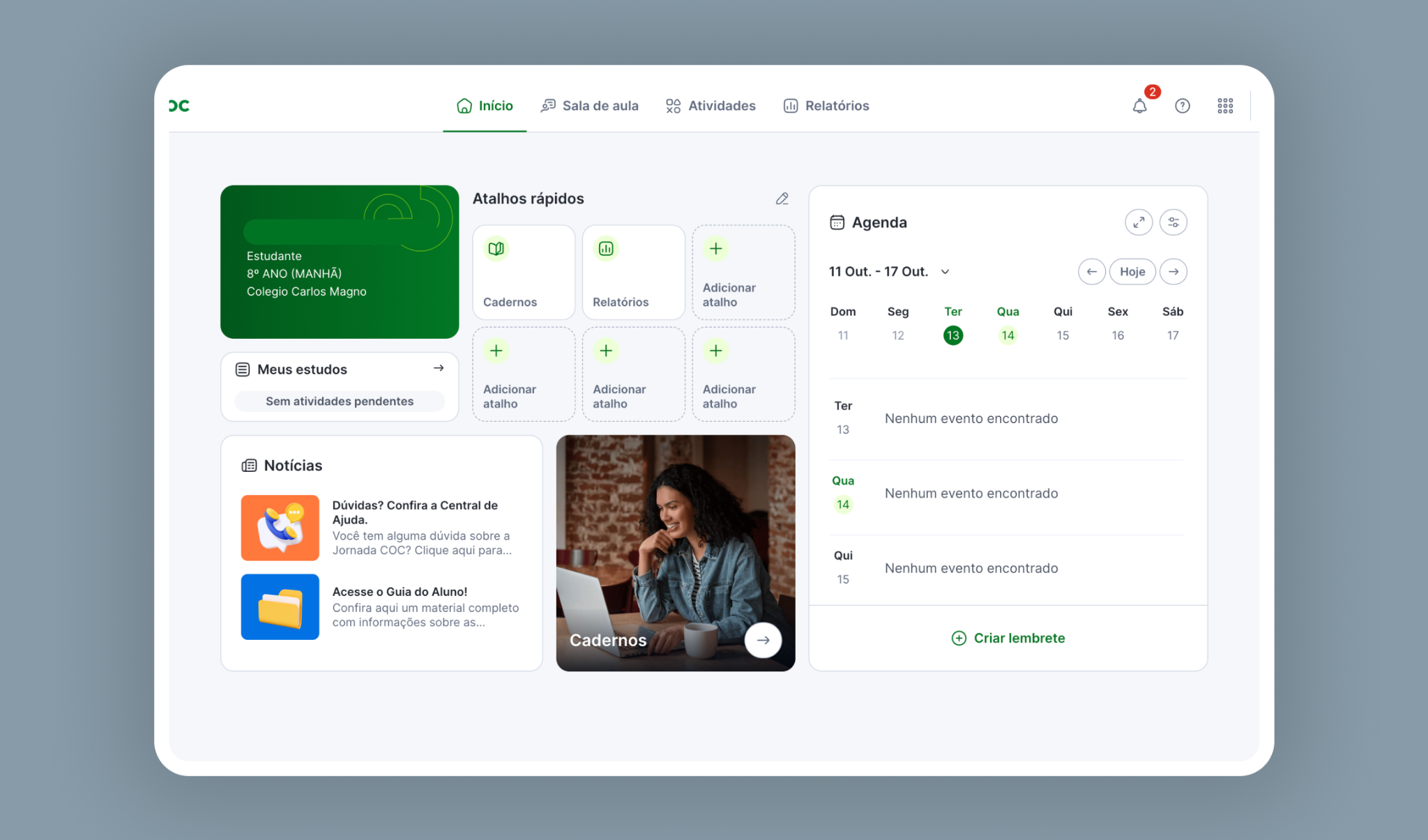
Once the experience had a stronger character, the surrounding interface also needed to support that personality. The visual direction moved toward brighter colors, stronger hierarchy, more expressive cards and illustrations. The result was a student experience deliberately more expressive than the administrative and teacher-facing parts of the ecosystem.
Outcome
The hackathon successfully communicated the value of a more integrated experience to stakeholders. The prototype helped make the future vision tangible and instead of discussing integration only at a strategic level, we showed how different parts of the ecosystem could come together in a coherent experience for schools, families, teachers and students.
That helped build stakeholder confidence in the direction, and Meu Arco was prioritized as an initiative for the following year. For the student experience specifically, the work also introduced a more expressive product direction through gamification and richer UI.
Learnings
Gamification works best when it supports the journey as a whole
The most useful ideas weren’t isolated rewards. They were moments where the interface acknowledged effort, difficulty, progress, and completion.
A mascot becomes useful when it has a purpose
Arquito became more meaningful once we defined when and why he should appear instead of treating him as mainly decoration.
AI can increase exploration without replacing design judgment
Generative AI helped us move faster and test more character directions during a short hackathon. The important decisions were still about behavior, context, tone, and product fit.